AI guilt has been trending. People feel bad about using these tools, and plenty of them are happy to make each other feel bad too. If you use AI, odds are you have at least one friend who is aggressively against it, the kind who boasts about never once touching the stuff.
I do not carry much of that guilt, because for me AI has been a multiplier. I have an app in the world that would not exist otherwise, a portfolio that got where it is with its help, and a personal agent that runs the busywork of my days. It even gets my spontaneous weeknight dinners on the table faster. It's like my friends don't want me to save time!
But I do feel the guilt secondhand, because those friends are thoughtful people, and their worries are not nothing.
The concerns are real
They worry about intellectual property being swallowed whole and slop filling every feed. They worry about energy prices climbing and what these systems do to our drinking water, about entry-level and creative jobs going first, and about a slow flattening of original thought as everyone reaches for the same tool. And under all of it runs the feeling that this is being sold to us as inevitable, like we do not get a vote.
Some of that is legitimate, and I am not going to wave it away. I will even grant my friends part of it: AI is not inevitable in the way the hype crowd means. It is not the answer to everything, and plenty of the grand promises are going to fall flat. But not being the answer to everything is a different claim from being something we can undo. We can't. Pandora's box is open and Skynet is here, folks. So the theory that if enough of us refuse the whole thing disappears does not hold, and in the meantime the job postings I am reading already assume I use these tools. "We do not have to adopt" is a nice idea, but who's going to tell the employers mandating it?
Here's a real example I ran into from one of my friends. I have painted portraits of two of my cats (yes, really), and I wanted to generate a photo of my third cat in the same style so I'd have a matching set. Friends told me I could not, because I would be stealing work from an artisan. But I have to say, a picture of my cat is not going to end anyone's career, and acting like it is misses the point. If anything, artisans have an opening here. "Made by a human, no AI" is already a selling point, the same as hand-made or organic. Handmade goods aren't going anywhere, not by a long shot.
We are taking real, structural problems and turning them into a morality test. Do you use it? How much and what use cases? Do you feel bad about it? These are the wrong questions, and we've asked them before.
We could never recycle enough
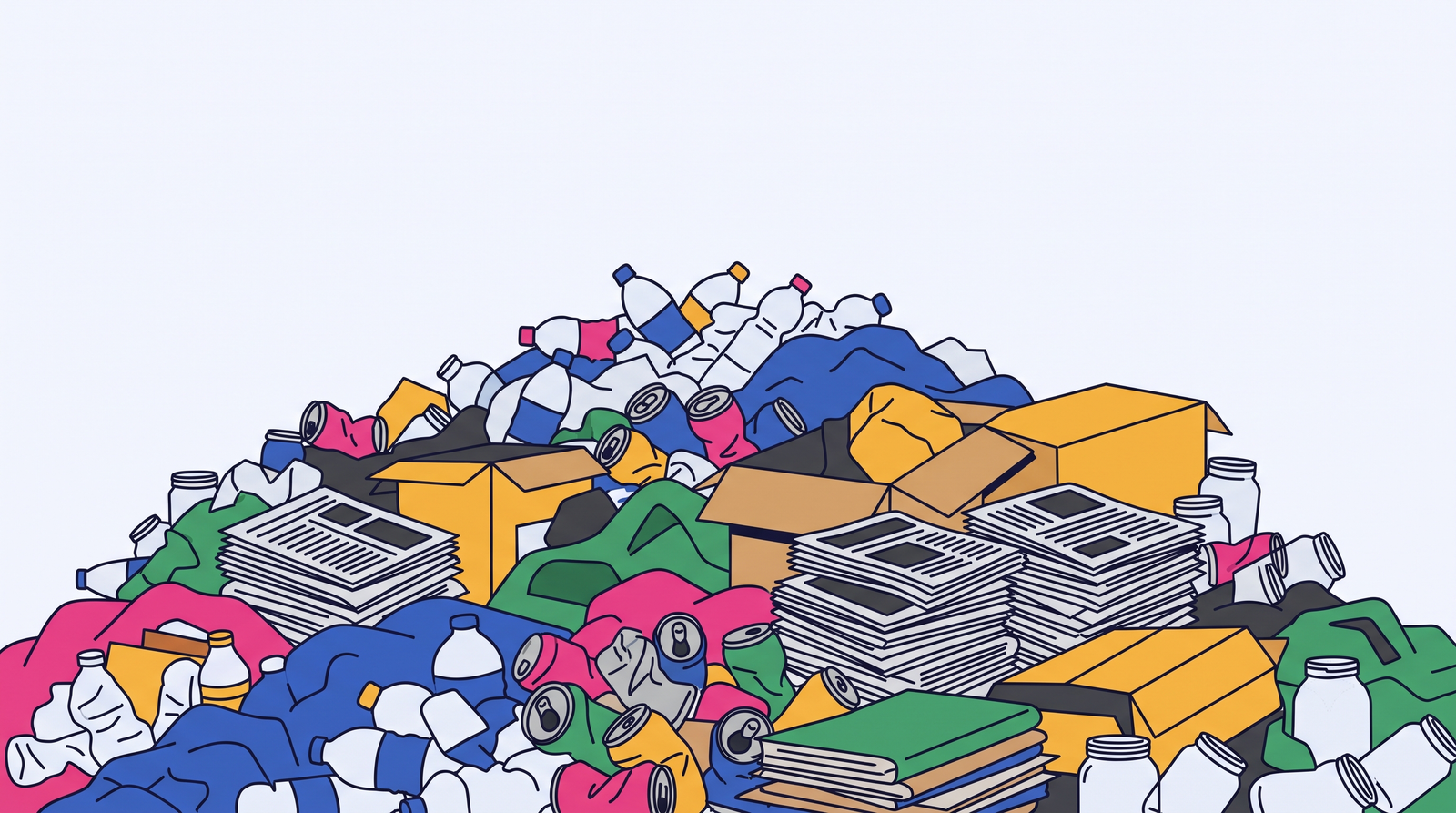
For years we were told the climate crisis came down to individuals (and fwiw, I recycle and you should, too). Your straws, sorted glass, and personal carbon footprint under scrutiny. Recycling was pushed hard by the oil industry, which knew most plastic would never actually be recycled and sold us on it anyway, because a public busy sorting its trash is a public that keeps buying plastic. The point was to move the story from who is producing this to what are you, personally, doing about it. Individual guilt was the product, and it kept us rinsing yogurt cups and side-eyeing our neighbors' bins while the companies doing the real damage carried on at a scale no amount of personal virtue could touch. I do think regulation and smart usage of AI is what we need, not scrutinizing friends' AI usage. BTW, I will still side-eye you for not recycling, but I think AI use is a bit different. ;)
We are repeating the same mistakes with AI. A student uses it to survive a workload that was already too big, a worker uses it to keep up with a job that keeps adding scope and shedding people, or someone job hunting uses it to get through a market where hundreds apply for every role. The unwelcome reply from a lot of folks is: you cheated, you are lazy, you are the problem.
Most "AI layoffs" are management choices in disguise
Here is the part that gets misread the most. A lot of what gets blamed on AI is not really about AI. It is rightsizing, and AI is the cover story. "The robots did it" is a much easier memo to send than "we decided to run leaner."
When Block, the company behind Square and Cash App, cut more than 4,000 jobs, around 40 percent of its staff, CEO Jack Dorsey pinned it on AI, saying a smaller team using the tools they are building could do more. But if you look at the numbers, Block had fewer than 4,000 employees before the pandemic, ballooned past 10,000, and that cut returned it back down towards pre-pandemic staff levels. That's not the robots taking over. Companies are simply unwinding their pandemic hiring and letting AI take the blame.
Not every company is making the same mistake. When IKEA trained a bot to handle nearly half its customer calls, it could have laid off 8,500 people, but instead it retrained them into a premium interior-design service that brought in over a billion euros. Klarna went the other way, cut hard, damaged its service and its reputation, and started rehiring humans within the year. The technology did not force any of that, bad leadership decisions did.
When we hand a laid-off worker, or a nervous student, the guilt for a choice a boardroom made, we are letting the actual decision-makers off the hook.
The real villains aren't your friends and neighbors
There are bad actors here. I just don't think they are the exhausted people just trying to get through the day.
On one side of the AI usage issue, you have people rushing to regulate a thing they don't understand, which tends to produce rules that miss the real harms and punish the wrong people. On the other you have leaders loudly modeling the worst behavior imaginable. Eric Schmidt, the former CEO of Google, stood in front of a room of Stanford students and told them to have an AI copy TikTok, "steal all the users, steal all the music," ship it, and if it took off, "hire a whole bunch of lawyers to clean the mess up later." He later had the talk taken down.
That is the permission structure at the top: take what you want, apologize with lawyers if it works. And we are spending our energy shaming a college kid for using a summarizer. We're stuck between people who don't understand this stuff and people who are happy to exploit it, and somehow we're all the ones being told to feel bad.
The AI witch hunt is a distraction
I also wonder if the whole "was this AI or not" obsession is aimed at the wrong thing. At the end of the day, does it matter whether a paragraph was AI-assisted, or whether it is any good? I can't imagine a world where quality doesn't rise. If AI content is thin and soulless, it won't perform, it'll ring hollow, and authenticity should win. Chasing the origin of every piece of work is exhausting.
Be easy on each other, hard on our leaders
Be easy on each other, and hold our leaders accountable. No amount of rinsed-out yogurt cups fixed the plastic the oil companies always knew would never be recycled, and no amount of guilt over a summarizer will fix a boardroom that decided to run leaner and blamed the robots. The people who steal in daylight and clean it up with lawyers are counting on us to keep sorting our own bins.
Who taught us to blame ourselves first?