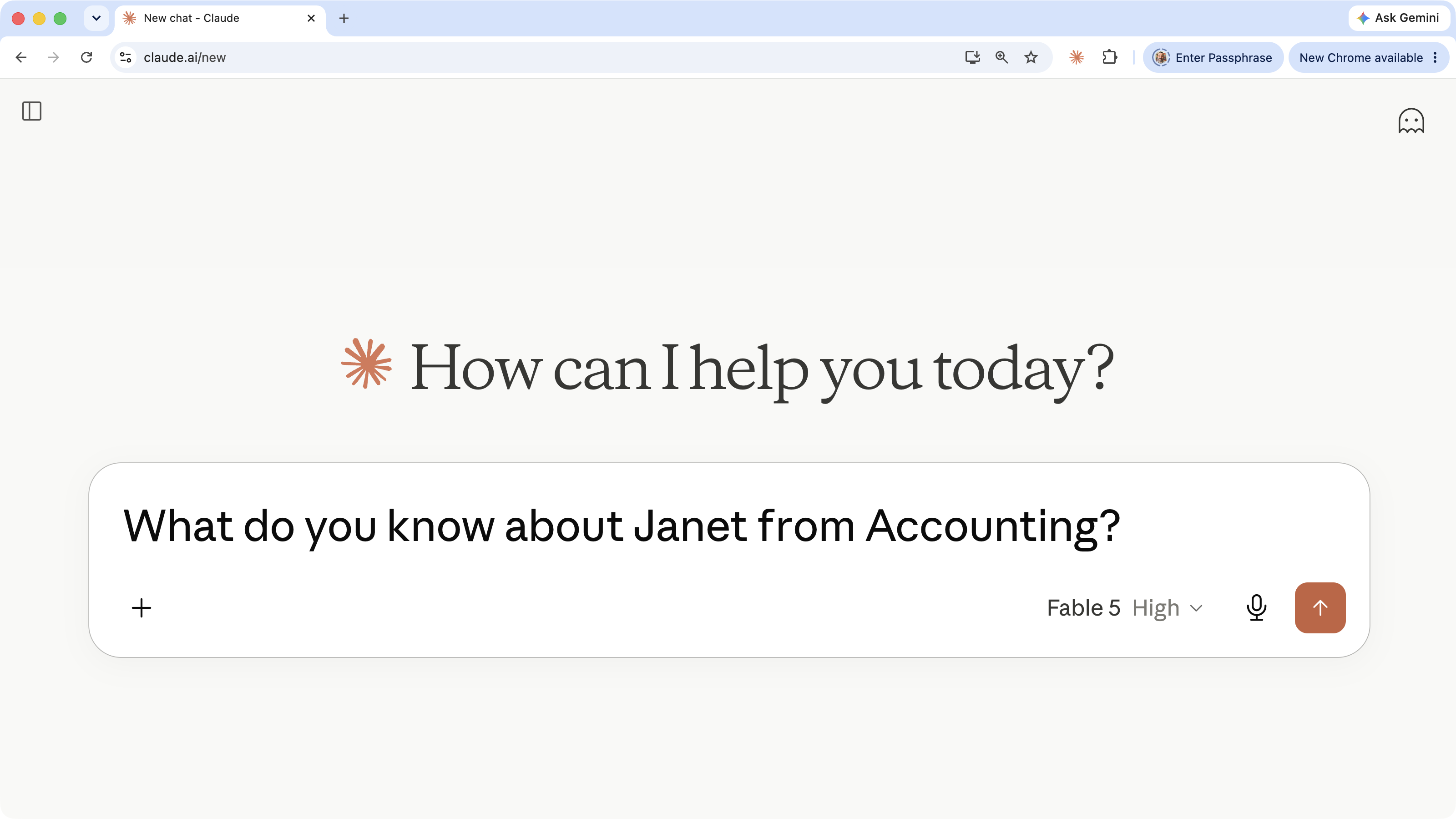
I track how people find my site. Occupational hazard. Lately something new showed up in the referrers: ChatGPT.
That's not a click from someone who Googled me. That's someone, or something acting on their behalf, asking ChatGPT about me, getting an answer that included a link, and following it back.
I've been watching the same thing happen at scale. Companies are starting to worry about AEO (answer engine optimization) and GEO (generative engine optimization) the way they worry about SEO. It's the same idea for knowledge workers: when a customer or candidate looks us up, do they find the real story, or an incorrect or outdated version?
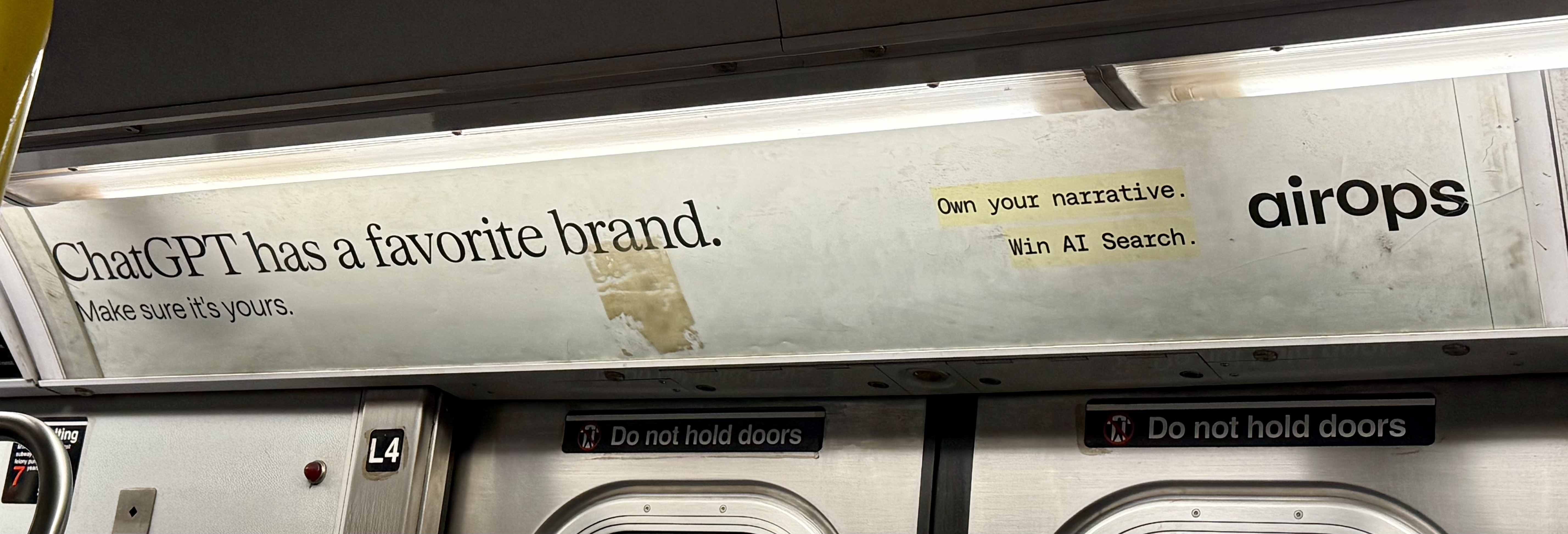
I'm not a brand, but I'm a name recruiters, hiring managers, colleagues, and even old friends may occasionally look up. And increasingly, agents will be doing these searches on their behalf.
Three goals: be less invisible in AI search, be consistent across the answers it gives, and lead with the work you'd want leading.
Why I started hosting my own blog
It's the same reason cereal brands fight for the eye-level shelf.
Hosting my own blog means I control the metadata. Person and Article JSON-LD, OpenGraph tags, canonical URLs, robots.txt allowances for AI crawlers. None of that is exotic, but you don't get to set any of it on LinkedIn or Medium.
It also means I expand my digital shelf space in a way I control. Every piece I publish on middleton.io is inventory that's mine, points to me, and teaches AI models who I am the way I want them taught. On someone else's platform, it's their shelf. They decide what gets seen. On mine, I decide what goes on the box.
The cold test
I ran it on myself. Asked Claude about me, cold, the way a stranger would.
Mostly good news. It knew the real me: the actual work, the companies, what I've shipped. Specific, not generic.
But there's another Kevin Middleton out there, an AI and automation strategist. In one of the runs, the AI blended us. It pulled bits of his career into mine. From the outside you wouldn't know which parts were wrong unless you knew me. You'd never call him a Full Stack PM, for instance. But to an AI doing a 30-second research pass, the difference isn't obvious.
That's why consistency matters. If you don't make it easy for an agent to tell who you are, it'll make up a version of you and hand it to a stranger.
The fix isn't louder marketing
It's specific, results-first proof, published in places you control, with the same name and story across every place you're mentioned on the web.
What I'm doing about it (and what you can do too)
The builder version:
- Publishing long-form on middleton.io instead of LinkedIn
- Person and Article JSON-LD on the site, so AI crawlers have structured facts to anchor to
- An
llms.txtpointing AI crawlers to the work I want them to find
The lo-fi version, which is most of the work anyway:
- Same name, same title, same one-line description of what you do, across LinkedIn, GitHub, personal site, conference bios, podcast guest pages, anywhere your name shows up
- A portfolio updated and live at a URL you own when possible
- Profile photos consistent enough that an AI scraping them can tell they're the same person
- A bio that leads with the specific (role plus shipped outcomes), not the generic ("curious leader passionate about innovation")
- On any page you control, the basics: meta description, OpenGraph image, structured data if the platform supports it
You don't need to host your own blog to do most of this. You do need to keep your story straight across the places your name lives.
Try it on yourself
Pick your AI of choice and run this. Use a logged-out or temporary chat, because many AIs remember their users, and you want the answer a stranger would get:
Read what comes back the way a stranger would. Does it lead with your strengths, or blur you into a category? Does it know what you've shipped, or just where you've worked? Does it confuse you with anyone else?
If the answer to any of those isn't what you'd want a recruiter to read, you have a project. Start tomorrow.
Make it a habit
Run this check every couple of months. The web moves, AI models retrain, old bios get pulled in, new content overshadows old, the doppelgänger gains followers. There's never a bad time to ask what an AI says about you.
Then ask yourself what you want it to say six months from now. The work to get from there to here is the only marketing that compounds.